Table of Contents
- Oregon Home Selling
- Which Areas in Oregon Offer the Best Return on Investment and Are Easiest for Residential Property Development?
- What Home Styles, Sizes, and Features Tend to Sell Fastest in the Oregon Market?
- What Should Home Sellers Know About Zoning Laws, Permits, and Regulatory Requirements in Oregon?
- Which Towns or Cities in Oregon Are Easiest, and Hardest, When It Comes to Navigating Real Estate Regulations?
- What Are the Most Effective Flipping and Resale Strategies for Maximizing Profit in Oregon's Housing Market?
- How Should Sellers Price Their Homes to Attract Buyers While Maximizing Value in Oregon?
- Which Key Economic, Social, and Regulatory Factors Are Driving Current Trends in Oregon's Local Property Markets?
Oregon Home Selling

Oregon's housing market remains competitive, thanks to limited supply and strong buyer activity. With a median sale price of around $513,000 in October 2025 (+1% year over year), the Beaver State is more expensive than the national median of roughly $440,000, but considerably cheaper than neighbors like California ($838,700) and Washington ($643,100).
A 3-month supply of homes (no change from the prior year) means Oregon remains a seller's market, though homes don't always sell quickly. During the warmer months, homes may sell in as few as 30 days, while the slow-moving winter market sometimes sees homes sit on the market for more than 60 days.
While the number of homes for sale has increased significantly in 2025, supply still fails to meet demand, putting upward pressure on prices. This resulted in more than 23% of listed homes selling above the asking price in October 2025, which is significantly fewer than in California (34%), but more than other border states like Nevada (15%) and Idaho (12%).
In 2024, Oregon's share of permits accounted for just 1% of the U.S. total, despite representing 1.3% of the nation's population. This did little to support additional supply or ease affordability. As of April 2025, the state was on pace to issue just 11,184 residential permits in 2025, less than one-third of the governor's total housing production goal. Unsurprisingly, Oregon received the lowest possible grade on Realtor.com's Homebuilding and Affordability Report Card, ranking near the bottom of all states.
Oregon's property tax rate of 0.83% puts it among the middle of all U.S. states. The state's moderate property taxes are relatively manageable for investors and homebuyers, though other states in the region, such as Nevada (0.49%) and Idaho (0.53%), may offer even lower rates.
In terms of foreclosures, Oregon generally sees fewer foreclosed homes than most other states. With a foreclosure rate of 1 in every 7,857 homes (as of October 2025), Oregon experienced far fewer foreclosures per housing unit than the national average and all four of Oregon's border states (California, Nevada, Washington, and Idaho). This low rate suggests a more stable housing market with high homeownership retention.
Although affordability remains a challenge across the state, Oregon offers solid investment potential due to a steady job market, rising prices, and low foreclosure rates. With some competition and slower-moving sales than in some other nearby markets, Oregon balances stability and the possibility of long-term appreciation.
Which Areas in Oregon Offer the Best Return on Investment and Are Easiest for Residential Property Development?

Based on an analysis of Oregon's real estate market, the following areas offer strong investment potential and easier development opportunities. This is because these areas offer a mix of good location, favorable local building and development laws, and high housing demand, making them attractive for both investors and developers.
-
Portland (Pearl District): The Pearl District in Portland is known for its upscale living, steady job opportunities, and rising property demand. Recent data shows the median home price for a property in the Pearl District is around $450,000. The district has high demand for long-term and short-term residents due to its employment opportunities and tourist appeal, making it a top choice for investment and rental opportunities.
-
Bend (Old Mill District): The Old Mill District in Bend is a lucrative market for property investment and rental income, particularly for those pursuing investments in mixed-use zoning. The median sales price for a property in the Old Mill District is $777,475, a 1.5% increase from the previous year.
-
Salem: Salem, Oregon's capital, had a median sale price of around $455,000 as of October 2025. With a sale-to-list-price ratio of 99.3% and 28% of homes selling above the asking price, Salem may be a good target for investors seeking stability and steady growth potential.
-
Eugene: With a median home sale price of $499,000 (no change year over year), Eugene offers strong investment opportunities and rental demand from University of Oregon students and faculty. Homes in Eugene tend to sell quickly, often in under 30 days, with steady demand from investors and owner occupants.
-
Baker City: Baker City has a property value of $276,390, putting it in the top five most affordable markets in the state. Home values here have increased steadily over the past several years, making it an attractive destination for real estate investors.
-
Hillsboro: The median home price in Hillsboro was roughly $530,000 in September 2025, reflecting steady demand in the tech-driven city. Hillsboro's mix of family-friendly amenities and access to Portland make it a good location for homebuyers and investors. In addition, local code changes now allow more accessory dwelling unit (ADU) development and middle-housing construction, giving investors and homeowners room to build and increase property income.
-
Lake Oswego: The median home price in Lake Oswego hovers around $1.1 million, showing strong demand for high-end homes. Properties spend a few months on the market, while inventory remains limited, keeping upward pressure on prices. As one of Oregon's most desirable housing markets for families and professionals working in Portland, Lake Oswego also offers pathways for ADUs and middle housing where zoning allows, which can add long-term flexibility and value.
-
Oregon City: With a median home sales price of roughly $550,000 (as of September 2025), Oregon City offers solid investment potential for those seeking a mix of small-town charm and suburban amenities. However, competition in the city is high, making it one of the toughest markets for buyers in the state. Homes here spend a median of just 14 days on the market, with 30% of homes selling above the original asking price. The city also offers potential for ADUs and middle-housing expansion under House Bill 2001, giving investors more options beyond single-family.
-
Corvallis: Home to Oregon State University, Corvallis offers steady rental demand driven by students, faculty, and staff. This consistent population flow supports long-term income prospects for investors. Corvallis has a median home sale price of $605,000, with properties typically selling in under two months.
-
Medford: Medford's housing market remains relatively balanced, with a healthy match of supply and demand. With a median list price of $450,000, most homes accept an offer within 38 days and tend to sell around 1% below asking. Home values in Medford have appreciated by around 25% over the past two years, consistently attracting investors and end users.
What Home Styles, Sizes, and Features Tend to Sell Fastest in the Oregon Market?

Homes in Oregon move at a steady pace, driven by demand from tech workers, remote workers, and individuals seeking access to outdoor activities. While seasonal peaks tend to increase market demand, sellers typically expect to wait a few months before finalizing home sales.
Across the state, certain home characteristics generally attract more buyers, potentially leading to additional offers and reducing days on market:
-
![]()
Bedrooms: In Oregon's popular suburbs and cities, such as Beaverton, Lake Oswego, Happy Valley, Bend, Portland, and Eugene, 3- to 4-bedroom, 2-bath single-family homes are high in demand. These homes typically appeal to growing families and remote workers who need extra space for home offices. In many areas, especially the suburbs, these homes sell in around 1-2 months.
-
![]()
Size and Lot: Homes sized between 1,500 and 2,500 square feet on 0.25- to 0.50-acre lots are usually highly sought after in Oregon cities like Salem, Medford, Eugene, Beaverton, and Hillsboro. These properties offer the perfect mix of comfortable indoor living and usable spaces, ideal for families and those who want privacy without excessive maintenance. Buyers generally appreciate the extra space for light landscaping and the option to build ADUs.
-
![]()
Style: Throughout Oregon, a variety of home styles appeal to different buyer segments and tend to move faster than other home types in most local markets.
-
Craftsman and Ranch-Style Homes: Ranch homes in places like Laurelhurst and Tigard are popular for their single-level layout, often selling in under two months.
-
Updated Victorian Cottages: In Ashland and Hood River, renovated Victorian cottages attract many buyers and sell fast thanks to their historic appeal and modern features.
-
Farmhouses and Cape Cods: In exurban areas, such as Wilsonville and Monmouth, modern farmhouses and Cape Cod-style homes tend to fetch premiums and go under contract in a few weeks.
-
Condos and Townhouses: In urban districts, such as Portland's Pearl and Bend's Old Mill, townhomes and condos sell fast due to their location and amenities.
-
-
![]()
Modern Upgrades: Homes with modern upgrades consistently sell faster in Oregon's competitive neighborhoods. Features such as open-concept kitchens, heat pumps, smart thermostats, and EV charging stations make properties more attractive to buyers. In high-demand areas, such as Lake Oswego and West Linn, these upgrades help homes sell within weeks. Buyers generally appreciate well-finished homes that don't require immediate updates.


What Should Home Sellers Know About Zoning Laws, Permits, and Regulatory Requirements in Oregon?

Generally, selling a home in Oregon requires a thorough understanding of local zoning rules and permits, which can greatly affect a property's value. Many buyers request a zoning compliance letter to confirm the home's zoning status, that the allowed uses match their plans, and that there aren't any violations or issues with noncompliance. Having this information ready may help avoid delays and put sellers in a stronger position to ask for a better price.
Oregon law ORS 227 and ORS 215 give cities and counties the authority to set their own zoning rules to ensure development aligns with statewide planning and goals. ORS 197 outlines land use laws and statewide goals, which include protecting the environment and historic areas.
Strict Zoning Laws
Strict zoning laws may be set by local governments that tightly control how land can be used and developed. These laws often limit building size, design, height, lot coverage, or even the number of units allowed. Oregon cities such as Portland, Lake Oswego, and Eugene have some of the strictest zoning regulations.
For example, Portland requires design review for facade changes and additions, while Lake Oswego enforces lot size rules and tree protection. In Eugene, the city's Land Use Code limits new development near protected lands and requires public hearings for some projects. These strict laws help preserve community character but may slow down or complicate construction and remodeling.
Less Bureaucratic Zoning Laws
Cities with fewer bureaucratic zoning laws in Oregon make it easier and faster for property owners to build or develop land. In counties like Deschutes, Klamath, and Coos, the permitting process is simpler and quicker due to fewer restrictions and limited review requirements.
In rural parts of Deschutes County, homeowners may add an accessory unit without going through lengthy public reviews. Klamath County's large lot sizes and fewer overlays mean fewer delays in getting building permits. In unincorporated areas of Coos County, most new homes or additions only need basic site and building permits, making these areas attractive for easier residential development.
Special Permit Requirements Via Public Hearing
In some Oregon cities, certain property developments require special permits that include a public hearing process and approval from the local zoning board or planning commission. This typically applies when a proposed use doesn't align fully with existing zoning laws, such as adding an ADU, opening a home business, or requesting a variance for setback or height limits.
In Bend, Corvallis, and Salem, the property owner must apply for a conditional use permit or variance and present their plans at a public hearing. The zoning board or planning commission then reviews the proposal, hears public comments, and decides whether to approve it. While this process ensures community input, it may also lengthen timelines, adding complexities for homeowners and developers.
Certificate of Occupancy Requirements
In Oregon, a Certificate of Occupancy (CO) is required for new construction, major remodels, or any change of use or occupancy under the Oregon Structural Specialty Code. A CO verifies that the structure meets safety and building code standards and has passed all required inspections. While a CO is not required to sell an unchanged single-family residence, it is mandatory before anyone can legally occupy a newly built or significantly altered home. Utilities may sometimes allow temporary power during construction, but full utility service is generally released only after final inspections and issuance of the CO.
Historic Commission Oversight
In Oregon, many cities require homes in designated historic districts to undergo review before exterior work, additions, or major renovations. Local historic commissions evaluate proposed changes to ensure they preserve the district's architectural character. Reviews may cover paint colors, window and roofing styles, exterior materials, or signage. This process is especially active in places like Portland's Historic Districts, Jacksonville, Oregon City, and the Ashland Downtown Historic District. Property owners usually must submit detailed plans for approval, and while the process can extend timelines, it safeguards the historic fabric of these neighborhoods.
Which Towns or Cities in Oregon Are Easiest, and Hardest, When It Comes to Navigating Real Estate Regulations?

Complying with zoning, permits, and land-use rules is important when building or selling a property in Oregon. Failure to follow the rules may cause delays, fines, or alterations to construction plans, which can cost additional time and money. Below is a general overview of which areas in Oregon are more friendly and flexible for developers and sellers, and which ones have stricter rules that can slow things down:
Development-Friendly Areas

Development-friendly areas in Oregon support growth with easy permitting processes and flexible zoning rules. These places often welcome new projects and work with developers to move things quickly:
- Redmond: Redmond is a pro-growth hub in Central Oregon with a fast-growing airport, logistics base, and a permitting department known for operating efficiently. Strong housing demand supports both residential and mixed-use infill.
- Albany: The city has an active planning department for housing and commercial growth, helping support development.
- Keizer: With infill incentives and downtown revitalization programs, Keizer leverages its proximity to Salem for retail and housing expansion.
- Klamath County (Unincorporated): The Building Division of Klamath County's unincorporated areas has flexible R-1 and R-2 zoning. The permit process for homes and accessory buildings is straightforward.
- Douglas County: Douglas County's land-use planning program is known for minimal design rules and flexibility. Most residential building projects require only basic administrative review.
- Josephine County: In Josephine County, rural residential zones, single-family dwellings, and accessory structures (including ADUs) are allowed using ministerial, over-the-counter review processes.
Moderately Regulated Areas
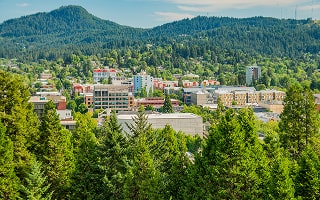
Moderately regulated areas in Oregon have clear rules, but some projects may need extra reviews or approvals. These locations in Oregon balance development with community standards and planning goals:
- City of Eugene: In Eugene, ADUs are processed through a ministerial, administrative process; no conditional-use hearing is required. However, larger home businesses may trigger hearings. Reviews generally take a few weeks.
- City of Salem: Variances are processed under a Type III procedure (discretion or legal judgment required) and include a public hearing before the Hearings Officer, following neighborhood notice and written criteria compliance.
- City of Bend: The city operates under the Growth Management Plan, which governs how and where new development may occur within the city limits. However, pre-application meetings help speed up and clarify the building process.
- City of Beaverton: The city requires special design review in some areas, but its permit center is fast and efficient, approving building permits within a few days, but not more than four weeks.
- City of Corvallis: The city's Planning Division uses a Land Use Application, which adds procedural steps for land use reviews and may require a hearing; however, most permits are approved within a few weeks and may be tracked online.
Highly Restrictive or Bureaucratic Areas

These areas have strict rules, strong public input, and extra layers of reviews, typically involving historic or environmental boards, leading to longer approvals:
- Portland: Portland has a variety of overlay zones that layer additional regulations on top of base zoning. Projects requiring Type III design review trigger public hearings before the Design Commission and include extended timelines, neighborhood notification, and formal posting.
- City of Ashland: Ashland's Historic District Development Standards govern alterations and new construction. These typically require a public hearing and may trigger compatibility reviews.
- City of Cannon Beach: Cannon Beach includes an Oceanfront Management (OM) Overlay Zone, which enforces ocean yard setbacks and prohibits most structures seaward. New construction triggers planning approval by the planning commission.
- City of Hood River: Alterations or development to historic districts and buildings are subject to review by the Landmarks Review Board, which typically involves public hearings and multiagency input.
- City of Lake Oswego: The city includes multiple area-specific overlay districts, which impose specific design reviews for facade changes and landscaping. Properties within these areas are subject to review by the Development Review Commission.
Regulatory Climate Factors

Oregon's development rules vary by area and significantly affect how easy it is to build, renovate, or flip a home. By complying with local laws, property investors can protect their investment and property value. The following table includes factors that affect property development, and where they're commonly found within Oregon:
Factor |
Impact on Development |
Where It's Found |
|---|---|---|
Zoning Flexibility |
Determines ease of land use |
Deschutes County (unincorporated Bend), Klamath County, Redmond, Springfield, Hermiston, Medford, and Douglas County (Roseburg area) |
Historic Preservation Laws |
Adds restrictions |
Portland Historic Districts (Alphabet, Irvington, and Skidmore), Ashland Historic District, Hood River Historic District, Oregon City, and Jacksonville |
Wetlands/Conservation |
Limits buildable land |
Willamette Valley floodplains (Eugene, Springfield), Gorge National Scenic Area, Hood River |
Inclusionary Zoning |
Requires affordable units |
Portland |
Building Code Enforcement |
Affects cost/speed |
Multnomah County (Portland), Clackamas County (Lake Oswego), Lane County (Eugene), Deschutes County (Bend), Marion County (Salem) |
Local Politics/NIMBYism* |
Blocks or delays projects |
Lake Oswego, West Linn, Cannon Beach, Hood River, Ashland, and Portland |
*NIMBYism - Not in My Backyard
What Are the Most Effective Flipping and Resale Strategies for Maximizing Profit in Oregon's Housing Market?

To ensure you get the most profit from reselling or flipping a home in Oregon, it's important to match your strategy to the local market. The following are some of the top strategies that work well across Oregon's housing markets:
-
![]()
Target Distressed or Foreclosed Homes: Distressed or foreclosed homes typically sell below market value, giving investors room for profit. In areas such as Gresham, Troutdale, Fairview, Medford, Albany, and Grants Pass, buyers who can move quickly, resolve title issues, and manage repairs can get high returns from flipping distressed and foreclosed homes.
-
![]()
Use the 70% Rule: This offer formula, 70% of the after-repair value (ARV) minus estimated repair costs, helps ensure you have room for profit, even if unexpected expenses arise. Using the 70% rule helps ensure that you stay within budget and that you have a larger margin to absorb any market slowdowns. This strategy is ideal in competitive neighborhoods, such as Portland, Eugene, Salem, Hillsboro, and Medford.
-
![]()
Try Wholetailing for Speed: Wholetailing for speed involves making cosmetic upgrades, like a coat of fresh paint, updated light fixtures, landscaping, and basic staging, before relisting a property. Wholetailing is ideal in suburban Oregon markets, such as Lake Oswego, Beaverton, West Linn, Gresham, and Tigard, where move-in-ready homes tend to sell quickly.
-
![]()
Follow the BRRRR Method (Buy, Rehab, Rent, Refinance, Repeat): With the BRRRR method, investors start by purchasing undervalued properties, renovating to boost value, and securing quality tenants. Once a stable rental income is secured, they refinance, usually pulling out up to 80% of the property's value, to fund the next purchase. The BRRRR method works in Oregon markets with strong rental demand, such as Eugene, Corvallis, Bend, Ashland, and parts of Medford and Springfield.
-
![]()
Go Beyond Cosmetic Work (Value-Add Flipping): Value-add flipping focuses on increasing a property's value by going beyond cosmetic upgrades to significantly boost resale value. In cities where zoning laws allow, adding an ADU, converting a single-family home into a duplex, or splitting larger lots into smaller ones may boost the value of the property. In Deschutes County and outer Salem, converting basements or garages into rentable units may increase the ARV significantly.
-
![]()
Stage and Price Strategically: Professionally staged homes with neutral decor and energy-efficient finishes tend to stand out in buyers' searches. Homes that include professional staging often sell faster and sometimes above the asking price, since buyers can easily picture themselves living in the space. This approach works in high-demand areas, such as Portland's Pearl District and South Waterfront, as well as in suburbs like Lake Oswego, Bend, and Eugene. When paired with strategic pricing, the property typically appears in more filtered searches, creating urgency.


How Should Sellers Price Their Homes to Attract Buyers While Maximizing Value in Oregon?

When pricing your Oregon home, local expertise and current market data are important to ensure you attract serious buyers and get top dollar for your property. To this end, it's essential to work with a local real estate agent or appraiser who can provide insight into key details that may impact the value of your property, such as rezoning or school districts. In addition, these professionals will analyze comparable homes sold, pending, or active within the last 90 days to help you set a competitive and realistic asking price that draws interest and offers. Below are the top pricing strategies Oregon sellers and investors use, along with the areas where each tactic typically thrives:
-
![]() Pricing Just Below Below Market Thresholds: Pricing below major price thresholds, such as listing at $399,900 instead of $400,000, may significantly boost a home's visibility online and attract more buyers. It's effective in high-demand areas, such as Beaverton, Hillsboro, Gresham, Springfield, and East Eugene, as well as entry-level markets like Lents and Montavilla.
Pricing Just Below Below Market Thresholds: Pricing below major price thresholds, such as listing at $399,900 instead of $400,000, may significantly boost a home's visibility online and attract more buyers. It's effective in high-demand areas, such as Beaverton, Hillsboro, Gresham, Springfield, and East Eugene, as well as entry-level markets like Lents and Montavilla.
-
![]() Charm Pricing (Psychological Pricing): Charm pricing works by listing a home with prices ending in numbers like "7" or a "9", for example, $299,999 instead of $300,000. Charm pricing is used in cities such as Albany, Keizer, Grants Pass, and Redmond, and suburban areas like Hillsboro, Gresham, and Medford. It's ideal for use in mid-tier and budget-friendly markets where buyers are more price-sensitive.
Charm Pricing (Psychological Pricing): Charm pricing works by listing a home with prices ending in numbers like "7" or a "9", for example, $299,999 instead of $300,000. Charm pricing is used in cities such as Albany, Keizer, Grants Pass, and Redmond, and suburban areas like Hillsboro, Gresham, and Medford. It's ideal for use in mid-tier and budget-friendly markets where buyers are more price-sensitive.
-
![]() Pricing to Create a Bidding War: Selecting a price to spark a bidding war starts by listing your home slightly below its market value. For example, you might price your home at $849,000 in a neighborhood where similar homes typically go for $875,000. This strategy builds urgency and draws in multiple buyers, usually leading to offers above asking. It works well in high-demand areas, such as Bend, Lake Oswego, and sought-after Portland school zones, such as Alameda or Bridlemile.
Pricing to Create a Bidding War: Selecting a price to spark a bidding war starts by listing your home slightly below its market value. For example, you might price your home at $849,000 in a neighborhood where similar homes typically go for $875,000. This strategy builds urgency and draws in multiple buyers, usually leading to offers above asking. It works well in high-demand areas, such as Bend, Lake Oswego, and sought-after Portland school zones, such as Alameda or Bridlemile.
-
![]() High-Anchor Pricing (Test the Waters): High-anchor pricing suggests listing your home at the top of the comparable market price range, say $1.15 million in an area where homes often sell for $1 million-$1.15 million, while highlighting the property's premium features and signaling exclusivity. This approach is effective in upscale areas, such as Dunthorpe, West Linn, Ashland, Lake Oswego, and the Pearl District in Portland.
High-Anchor Pricing (Test the Waters): High-anchor pricing suggests listing your home at the top of the comparable market price range, say $1.15 million in an area where homes often sell for $1 million-$1.15 million, while highlighting the property's premium features and signaling exclusivity. This approach is effective in upscale areas, such as Dunthorpe, West Linn, Ashland, Lake Oswego, and the Pearl District in Portland.
-
![]() Price-Per-Square-Foot Benchmarking: This pricing strategy uses local prices per square foot to arrive at an asking price backed by market data. Pricing per square foot works well in condo-rich locations, such as Portland's Pearl District, South Waterfront, and Downtown Eugene, where layouts and amenities are mostly uniform.
Price-Per-Square-Foot Benchmarking: This pricing strategy uses local prices per square foot to arrive at an asking price backed by market data. Pricing per square foot works well in condo-rich locations, such as Portland's Pearl District, South Waterfront, and Downtown Eugene, where layouts and amenities are mostly uniform.
-
![]() Appraisal-Backed Pricing: Appraisal-backed pricing is important in areas with high FHA or VA loan use, such as Medford, Grants Pass, and parts of Springfield, Klamath Falls, and Roseburg. In these markets, buyers typically rely on appraisals to secure loans. Listing at 95%-100% of the expected appraised value helps prevent deals from falling through due to appraisal shortfalls, avoiding last-minute negotiations and delays.
Appraisal-Backed Pricing: Appraisal-backed pricing is important in areas with high FHA or VA loan use, such as Medford, Grants Pass, and parts of Springfield, Klamath Falls, and Roseburg. In these markets, buyers typically rely on appraisals to secure loans. Listing at 95%-100% of the expected appraised value helps prevent deals from falling through due to appraisal shortfalls, avoiding last-minute negotiations and delays.
-
![]() Net-to-Seller Pricing: To calculate net-to-seller pricing, sellers estimate their closing costs, including agent commissions, escrow fees, and transfer taxes, then subtract them from their desired net proceeds. This figure helps sellers set a list price high enough to cover those expenses while remaining competitive in the local market. This pricing strategy helps homeowners in higher-tax or higher-fee markets, such as Salem, Eugene, Corvallis, and Beaverton, ensure they walk away with the profit they want to achieve their financial goals.
Net-to-Seller Pricing: To calculate net-to-seller pricing, sellers estimate their closing costs, including agent commissions, escrow fees, and transfer taxes, then subtract them from their desired net proceeds. This figure helps sellers set a list price high enough to cover those expenses while remaining competitive in the local market. This pricing strategy helps homeowners in higher-tax or higher-fee markets, such as Salem, Eugene, Corvallis, and Beaverton, ensure they walk away with the profit they want to achieve their financial goals.
-
![]() Urgency Pricing (Motivated Seller Strategy): Urgency pricing is when property is listed at a discount, say 5%-8% below market value, to spark immediate interest from buyers. It's effective in situations where sellers need fast sales, such as estate settlements, divorce cases, or pre-foreclosures, in areas like Clackamas County, Springfield, Klamath Falls, and Roseburg.
Urgency Pricing (Motivated Seller Strategy): Urgency pricing is when property is listed at a discount, say 5%-8% below market value, to spark immediate interest from buyers. It's effective in situations where sellers need fast sales, such as estate settlements, divorce cases, or pre-foreclosures, in areas like Clackamas County, Springfield, Klamath Falls, and Roseburg.


To get the best price and sell quickly in Oregon, it's important to match your pricing strategy to your home type and local market conditions. Once you've reviewed comparable listings from the last 90 days, use the following tips to guide your pricing approach:
Market Condition |
Best Strategy |
|---|---|
Seller's Market |
Underpricing for a bidding war |
Buyer's Market |
Charm pricing or net-to-seller |
Unique, luxury home |
High-anchor + value justification |
Entry-level home |
Just below threshold |
Urgent sale needed |
Aggressive urgency pricing |
Flipper or investor listing |
Appraisal-backed or price-per-square-foot |
Which Key Economic, Social, and Regulatory Factors Are Driving Current Trends in Oregon's Local Property Markets?

Oregon's property market is shaped by strong economic growth, changing population trends, and varying local rules that affect home supply and demand across the state.
![]() Economic Factors
Economic Factors
 Economic Factors
Oregon's unemployment rate jumped to 5% in August 2025, its highest since 2021. However, Oregon's economy is growing steadily, boosted by job growth from the tech, healthcare, and renewable energy industries, especially around the Portland metro area. In 2024, Oregon's average hourly earnings i ncreased by 4.9%, surpassing the national average. This wage gain is fueling the purchasing power of many homebuyers across the state.
Though new construction falls short of persistent demand, builders are active, especially in suburbs such as Beaverton, Hillsboro, and other parts of Portland. These areas are particularly appealing to families seeking more affordable homes with access to good schools and transit options.
![]() Demographic and Social Factors
Demographic and Social Factors
 Demographic and Social Factors
Oregon continues to experience steady in-migration, especially from higher-cost states, such as California and Washington. This influx boosted demand for both upscale urban condos, like those in Portland's Pearl District, and spacious suburban areas like Lake Oswego, West Linn, and Happy Valley. With a median age of 40.7, many buyers are families seeking 3-4 bedrooms or older adults looking for low-maintenance living in walkable, amenity-rich neighborhoods.
Environmentally-conscious residents also prioritize energy-efficient homes, solar upgrades, and proximity to parks and transit. This blend of lifestyle and sustainability shapes housing demand and local trends across Oregon cities.
![]() Regulatory and Legal Framework
Regulatory and Legal Framework
 Regulatory and Legal Framework
The 2019 House Bill 2001 and Portland's Residential Infill Project permit duplexes and fourplexes in most single-family zones, encouraging diverse and affordable housing types. However, the state's urban growth boundary restricts large-scale outward expansion, meaning builders must be strategic about where new homes are built.
Although Oregon has statewide rent stabilization (Senate Bill 608) capping most annual increases and requiring just-cause for evictions, Portland goes further by requiring larger developments to include affordable units under its Inclusionary Housing Program. These policies create more flexibility for developers while preserving green space and guiding smarter, higher-density growth in cities like Portland, Eugene, and Bend.
![]() Taxation and Fiscal Policy
Taxation and Fiscal Policy
 Taxation and Fiscal Policy
Oregon has no general sales tax, which benefits everyday consumers (though capital gains are taxed as regular income). The state uses a progressive state individual income tax starting at 4.75% to 9.9%, depending on income and filing status. Oregon's Kicker Law also refunds extra income tax revenue to residents when state collections exceed forecasts, putting money back in people's pockets, allowing them to spend locally, including being able to afford a home in the state.
Property taxes of around 0.83% in Oregon are roughly in line with the national median, making real estate ownership relatively affordable, especially in cities like Salem, Medford, and Eugene. These taxation policies support homeownership and long-term investment stability.
![]() Housing Policy and Government Programs
Housing Policy and Government Programs
 Housing Policy and Government Programs
Oregon Housing and Community Services (OHCS) offers several programs to help first-time homebuyers. These include down-payment assistance, low-interest loans, and mortgage tax credits. The support is available statewide, but extra help is directed to rural areas where housing costs are rising faster than incomes. OHCS also partners with local nonprofits and lenders to provide homebuyer education, helping buyers understand the process and manage costs. These programs aim to make homeownership more accessible for working families, especially in high-need regions like Southern Oregon, the Willamette Valley, and the Columbia Gorge, where affordability challenges are growing.
![]() Infrastructure and Development Trends
Infrastructure and Development Trends
 Infrastructure and Development Trends
Oregon's transit upgrades are reshaping housing demand. The expanded MAX Red Line extension into Hillsboro and the proposed Southwest Corridor Light Rail Project are encouraging dense mixed-use development near stations. These projects make it easier for people to live without cars, boosting interest in walkable neighborhoods outside central Portland. Cities like Beaverton, Gresham, and Tigard are seeing more multifamily housing near transit stops, helping meet demand and ease pressure on the housing market.
![]() Market Sentiment and Investor Behavior
Market Sentiment and Investor Behavior
 Market Sentiment and Investor Behavior
Home prices in Oregon are expected to continue rising. This steady growth is drawing investors back into the market, especially for value-add flips and rental conversions. The state's low foreclosure rates and strong home equity gains show continued market stability, encouraging long-term investment. Areas like Gresham and Hillsboro remain investor favorites, supported by high demand and Oregon's reputation as a reliable, high-return real estate market.
Oregon's housing market blends rising demand with limited supply and complex local rules. From Portland's urban core to rural towns in the central part of the state, sellers and developers must work around growth boundaries, zoning codes, and design reviews. Wage increases and the arrival of out-of-state residents keep demand high, especially for single-family homes and infill housing. Transit projects and incentives are also guiding where new construction thrives, while ADUs and light renovation strategies boost returns on existing homes. The state's supportive tax policies and first-time buyer programs have helped keep the market steady and promote more accessible homeownership. As with all real estate investments, success in Oregon's housing market depends on understanding local regulations, buyer trends, and development patterns.
Table of Contents
- Oregon Home Selling
- Which Areas in Oregon Offer the Best Return on Investment and Are Easiest for Residential Property Development?
- What Home Styles, Sizes, and Features Tend to Sell Fastest in the Oregon Market?
- What Should Home Sellers Know About Zoning Laws, Permits, and Regulatory Requirements in Oregon?
- Which Towns or Cities in Oregon Are Easiest, and Hardest, When It Comes to Navigating Real Estate Regulations?
- What Are the Most Effective Flipping and Resale Strategies for Maximizing Profit in Oregon's Housing Market?
- How Should Sellers Price Their Homes to Attract Buyers While Maximizing Value in Oregon?
- Which Key Economic, Social, and Regulatory Factors Are Driving Current Trends in Oregon's Local Property Markets?